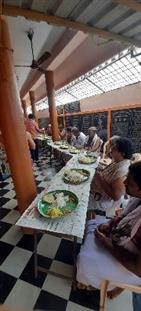





Our Services
1. Funeral
2. Antima Samskaram
3. Peddakarma
4. Chinnakarma
5. Shodasha Samskaram
6. Silavyasam
7. Nityakarma
8. Sapindi karnam
9. Maasikamulu ( Monthly Rituals )
10. Tirupaksham
11. Oshadam
12. Shoshasam Ritual
13. Mahalaya Paksham
14. Astika Nimajjanam
15. Birthday Anniversary
16. Death Commemoration
17. Narayana Bali
18. Nagbali
Rituals
Rituals can help us to understand concepts that are otherwise elusive to grasp.
The Hindu religion teaches that when someone dies, the soul passes into another body. That belief in reincarnation provides the foundation for Hindu funeral, traditions. Although different groups have slightly different practices, there is a common set of Hindu funeral rites they all follow
The death ritual does not end with the elimination of the body. There is still the safety of the soul to look after. To ensure the passage during its voyage to the otherworld an eleven-day ritual called SHRADDHA is performed. It consists of daily offerings of rice balls, called PINDAS, which provides a symbolic, transitional body for the dead. During these days, the dead person makes the journey to the heavens, or the world of ancestors.
What is a Hindu Funeral?
Hindu death rituals dictate that the cremation is the norm, but the body remains in the family's home until it is moved to the cremation location.
Why do Hindus cremate and not bury the deceased?
- The fire God, "Agni," was regarded as a messenger between humans and God. Agni consumes the body and conveys the spirit to the ancestors.
- The body is believed to be made up of five principle physical elements: Earth (Pruthwi), Air (Vayu), Fire (Tej), Water (Jala) and Space (Akash), and the cremation process returns the body to these elements in the form of smoke and ash to be placed in water.
- The whole life of a Hindu is looked upon as a continuous sacrifice. Death is observed as a sacrifice as well. Cremating the deceased is the final sacrifice that is offered to Agni. If the body is buried and if the deceased carried a contagious disease, such as the Plague, Typhoid etc. it may promote further spread of the disease which was prevented through cremation.
A Hindu funeral may have three parts:
1. A funeral in the family's home.
2. A cremation ceremony.
3. 3. A "Shraddha" ceremony .
The "Shraadha" ceremony can be performed everyday or all on the 11th day to maintain the "Preta" state of the deceased. "Preta" means departed. At this stage, the Soul has not reached the "Pitru" world yet, and the Soul continues his relation with the world from which he left.
To pay homage to the departed, people perform the "Ekodishta" ceremony on the 11th day. A "Pindadaan" ("pinda" meaning balls of cooked rice) for each day (total 10) is offered. It is believed that these "Pindas" provide nourishment for full growth of the body and energy for the journey Soul to "Pitru" world.
On the 12th day, the "Sapindikarana" ceremony is conducted to elevate the Soul to "Pitruloka." Here, the Soul is joined with its forefathers. All friends and family members are invited to the "Sapindikarana" ceremony. This ceremony is usually done on a larger scale and large donations of food and money are given. With Vishnu as a special witness, Brahma, Rudra, and Yama are invoked by the priest. In their presence the deceased is offered "Pindas." All of the people attending the ceremony eagerly wait for the crow(s) to pounce and eat the rice. The belief is that when crows eat the rice, it symbolizes a fulfillment of all the deceased's wishes. Since the Soul joined his forefathers (ancestors) in Pitru Loka there is a sense of relief among his loved ones. If the crows do not come or there is a long delay, it is considered a signal that the deceased had an unfulfilled desire. Hindus believe that unfulfilled desires of the dead prevent the Soul from being liberated. The priest will ask the mourner to think of possible unfulfilled desires the deceased may have had and declare that those desires be fulfilled. Then the priest asks the crows to eat the rice. If nothing occurs then, declare a large donation for a worthy cause.
In some parts of India, people believe the best thing that can happen is when an Eagle (or another species of the eagle family such as a Hawk) pounces on the rice ball suggesting that the Soul is being directly elevated to Deva loka or Swarg Loka (Heaven). This is considered the best because the Eagle is a messenger of the Lord Vishnu and it takes the Soul to Vaikuntha (Heaven).
On the twelfth day, the departed soul is said to reach its destination and be joined with its ancestors, a fact expresses.
On the thirteenth day, Shubham karyam and Navagraha Shanti Yagna are performed.

All rights reserved by Swargmarg.org
Design by Bluemenhost.com
Cremation ritual ( Antyeshti ) or Funeral
Antyesti , last rites sometimes referred to as Antima Samskaram, Antya-kriya, Anvarohanyya, or Vahni Sanskara, are the rituals associated with funeral. A dead adult Hindu is mourned with a cremation, while a dead child is typically buried. The rite of passage is performed in harmony with the sacred premise that the microcosm of all living beings is a reflection of a macrocosm of the universe. The soul (Atman, Brahman) is the essence and immortal that is released at the Antyeshti ritual, but both the body and the universe are vehicles and transitory in various schools of Hinduism. They consist of five elements - air, water, fire, earth and space. The last rite of passage returns the body to the five elements and origins.
Burn him not up, nor quite consume him, Agni: let not his body or his skin be scattered,O all possessing Fire, when thou hast matured him, then send him on his way unto the Fathers.When thou hast made him ready, all possessing Fire, then do thou give him over to the Fathers, When he attains unto the life that waits him, he shall become subject to the will of gods.The Sun receive thine eye, the Wind the Prana (life-principle, breathe); go, as thy merit is, to earth or heaven. Go, if it be thy lot, unto the waters; go, make thine home in plants with all thy members.
Shmashana - The Cremation or Burial Ground
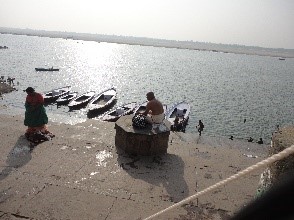
The cremation ground is called Shmashana (in Sanskrit), and traditionally it is located near a river, if not on the river bank itself. Those who can afford it may go to special sacred places like Kashi (Varanasi), Haridwar, Prayagraj (also known as Allahabad), Sri Rangam, Brahmaputra on the occasion of Ashokastami and Rameswaram to complete this rite of immersion of ashes into water.
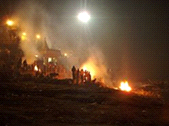
Some of the cremations are performed at ghats.
The eldest son, or a male mourner, or a priest - called the lead cremator or lead mourner - then bathes himself before leading the cremation ceremony. He circumambulates the dry wood pyre with the body, says a eulogy or recites a hymn, places sesame seeds or rice in the dead person's mouth, sprinkles the body and the pyre with ghee (clarified butter), then draws three lines signifying Yama (deity of the dead), Kala (time, deity of cremation) and the dead. Prior to lighting the pyre, an earthen pot is filled with water, and the lead mourner circles the body with it, before lobbing the pot over his shoulder so it breaks near the head. Once the pyre is ablaze, the lead mourner and the closest relatives may circumambulate the burning pyre one or more times. The ceremony is concluded by the lead cremator, during the ritual, is kapala kriya, or the ritual of piercing the burning skull with a stave (bamboo fire poker) to make a hole or break it, in order to release the spirit. All those who attend the cremation, and are exposed to the dead body or cremation smoke take a shower as soon as possible after the cremation, as the cremation ritual is considered unclean and polluting. The cold collected ash from the cremation is later consecrated to the nearest river or sea.
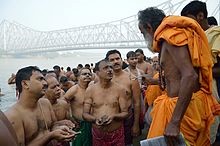
Nimajjanam- Immersion of Ashes
Nimajjanam is a sacred ritual in Hinduism where after the cremation rites, the ashes are ceremonially immersed in holy water by the closest relatives, so that the soul may rise to heaven. In Hindu mythology, king Bhagiratha performed a tapasya to bring down the river Ganges upon earth, so that he could immerse the ashes of sixty thousand of his slain ancestors in her sacred waters.
Pedda Karma (Pind Sammelan ) - 13th day of death
Pedda Karma , also called Spindi or terahvin or Pind Sammelan, is a ritual performed in Hinduism on the 13th day of death of somebody. This ritual is performed to place the departed soul with the ancestors and God. It is believed that before the ritual the departed soul is a preta (evil spirit), and after performing this ritual, the soul will become "pitr" (good spirit) and will be included in the ancestors.
Tilatarpana
Tilatarpana is the tarpana (or arghya) offered to pitris (departed ancestors) by male descendants who do not have a living father. This is offered at the first annual shraddha (death anniversary) and during subsequent annual shraddhas, amavasyas (new moon days), sankramanas (solar ingresses), eclipses, and during visits to selected holy places of pilgrimage.
Sapindikarana
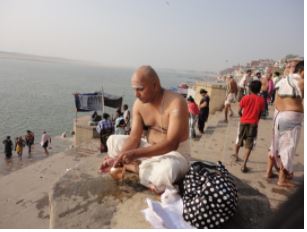
On the 12th day, the "Sapindikarana" ceremony is conducted to elevate the Soul to "Pitruloka." Here, the Soul is joined with its forefathers. All friends and family members are invited to the "Sapindikarana" ceremony. This ceremony is usually done on a larger scale and large donations of food and money are given. With Vishnu as a special witness, Brahma, Rudra, and Yama are invoked by the priest. In their presence the deceased is offered "Pindas." Four "Pindas"(rice balls) , three representing three generations of forefathers and one representing the deceased, are used in the ceremonial worship. At the end of the ceremony all four "Pindas" are united by pressing cooked rice balls together to make one large "Pinda," hence the name "Sapindikarana." Joining the "Pindas" symbolizes the meeting of the departed Soul with his forefathers. This ceremony completes the journey of the Soul that started in "Pretaloka" and attains its final destination in "Pitruloka," the world of forefathers; thus elevating "Preta" to "Pitre". o One of the final steps in the ceremony is offering a ball of rice, "Pindadaana," to a crow. This much-despised bird becomes very important because it is believed to be the messenger of Yama, the Lord of death.

Maasikam
Maasikams are the offerings of food items to the departed soul periodically during their first day in the Pitru Lok, the other world. Perform masikam in Varanasi through the Tirth KshetraPurohit's pandit for masikam in Varanasi. In Pitru lok, one day is as long as one year on earth. If we perform masikam in Varanasi 12 times, it means it is a two-hourly offering of food to the ancestors. It is believed that the departed soul takes much time to get rid of the habits and they feel hunger & thirst very often during the first day.
Oona Maasikam
Maasikams are the offerings of food items to the departed soul periodically during
their first day in the Pitru Lok, the other world. If we perform masikam in Varanasi
12 times, it means it is a two-hourly offering of food to the ancestors.
- Oona masikam should not be done on kartha"s birth star;
- Oona masikam should not be done on tuesdays, fridays and saturdays.
- Oona maasikam should not be done on prathamai, shashti; aekaadasi; chathurthi; navami; chatrhurdasi thithi days .
- 27th day Oonam can be done on any one day 28th or 29th or 30th day;
- 45th day Oonam may be done from 41th to 45th day; any one day;
- 6th month Oonam may be done on any one day from 171 to 180 days;
- Oona Aaptheekam may be done on any one day from 341th to 355th day.
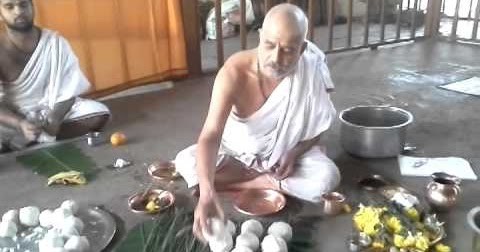
Samvatsarikam
First Year Ceremony - Brahmins Samvatsarikam is the Four days program in which the first three days Masikam, Vimokam, and Prathama abdikam is performed and on the 4th day, Navagraha Shanti is performed.All the family members come together and the elder most son performs the Taddinam as the main Karta and Gives danam to the brahmins as per his shakti to get the blessings from the Pitrus.
Mahalaya Paksham
Mahalaya marks the last day of Pitru Paksh and is also known as sarva pitra amavasya. It is said that on mahalaya amavasya morning first ancestors are given farewell, Mahalaya amavasya tharpanam or tarpan and rituals are performed to invoke the blessings of the ancestors and seek their blessings for a peaceful and prosperous life. Mahalaya amavasya is observed on the last of the Pitr Paksha, the 'fortnight of the ancestors' and is also the most significant day of this period. On the day of Pitra Moksha Amavasya, the observer gets up early and finishes the morning rituals. They wear yellow clothes on this day and invite a Brahmin to their house. The shraddha ceremony is observed by the eldest male in the family.
As the Brahmin comes, the observer of the ritual washes their feet and provides them a clean place to sit. In Hindu scriptures there is specific direction for seating. Deva Paksha Brahmin are seated facing east, while Pitra Paksha and Matru Paksha Brahmin are seated facing the northern direction. On the Mahalaya Amavasya the ancestors or 'pitrs' are worshipped with dhoop, diya and flowers. A blend of water and barley is also offered to please the forefathers. A sacred thread is worn on the right shoulder and a splint is offered as donation. Special food is prepared for this event and offered to the Brahmins after finishing the puja rituals. Sesame seeds are also sprinkled at the floor where the Brahmins are seated. This day is celebrated in honour of the ancestors and the members of the family spend the day in their remembrance. Mantras are recited to invoke the blessings of ancestors. On this day, people thank their ancestors who have contributed for their life. They also ask apology from their forefathers and pray that their souls rest in peace.
Sodakumbham
Generally, sodakumbham is sodakakumbham. It is believed that the departed soul will be examined by a panel of superhuman entities to find out whether it is eligible to be admitted into the pitru loka or not, during sapindeekaranam at the time of abdikam in Varanasi. By this masikam, we are trying to make the superhuman judges know that the dead person's son or daughter, etc. are all shraddhalus and we wish admission in pitruloka for the departed soul. The pandit for rituals in Varanasi is helping us to attain this wish to the lords.
Naryana bali puja
Narayan Bali Puja (in all cases of abnormal death) is a necessary ritual described in Garuda Purana which is performed in all cases of abnormal death, defined as follows: death by fasting, by animals, by accident, by arson, by a curse, by cholera or any unusual disease which suddenly caused untimely death, suicide, fall from a mountain, tree or any height, drowning, death by muggers or robbers, by snake bite, struck by lightning, murder, and persons who are great sinners, pitra dosh in the horoscope, delay in marriage, problems in conceiving child, business loss, family separation, etc. For all unnatural death, there is neither ritual for cremation, nor tarpana, nor shraddh nor asaucham. Narayan Bali consists of the same ritual as a Hindu funeral. Vedic Mantras are chanted to invoke such lost souls. Narayan Bali puja causes the soul to liberate and transcend.
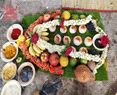
When Narayan Bali puja performed with thila homam ?
1. Unnatural death like accident, due to covid. Snake bite etc.
2. Pitra dosh found in the horoscope
3. Due to life-related events where you feel that one should do some type of Puja for their ancestors. This should be done by consulting us or any day during pitru paksha period.
4. When there is a death of an unmarried man/woman.
5. Delay in marriage/ conceiving a child
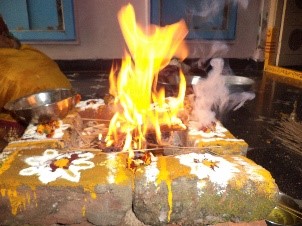
Narayan Nagbali
Narayan Nagbali is a three-day Hindu ritual performed at Trimbakeshwar in the Nashik District [Maharashtra, India.
The Narayan bali ritual is performed by families to liberate souls of family members who met an untimely death and the Nag bali to absolve the sin of killing a king cobra respectively.
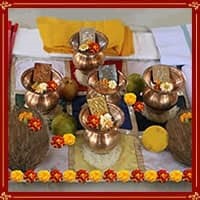
Covid Death of a Child
The final rites of a burial, in case of untimely death of a child, , where the hymns mourn the death of the child, praying to deity Mrityu to "neither harm our girls nor our boys", and pleads the earth to cover, protect the deceased child as a soft wool.
The last rites are usually completed within a day of death. His or her body is washed, wrapped in white cloth if the dead is a man or a widow (red if her husband is still alive), the two toes tied together with a string, a Tilak (red mark) placed on the forehead. The dead adult's body is carried to the cremation ground near a river or water, by family and friends, and placed on a pyre with feet facing south. The eldest son, or a male mourner, or a priest then bathes before leading the cremation ceremonial function. He circumambulates the dry wood pyre with the body, says a eulogy or recites a hymn in some cases, places sesame seed in the dead person's mouth, sprinkles the body and the pyre with ghee (clarified butter), then draws three lines signifying Yama (deity of the dead), Kala (time, deity of cremation) and the dead. The pyre is then set ablaze, while the mourners mourn. The ash from the cremation is consecrated to the nearest river or sea. After the cremation, in some regions, the immediate male relatives of the deceased shave their head and invite all friends and relatives, on the tenth or twelfth day, to eat a simple meal together in remembrance of the deceased. This day, in some communities, also marks a day when the poor and needy are offered food in memory of the dead.
Maha shivarathri
Maha Shivaratri is an annual festival dedicated to the Hindu god Shiva, and is particularly important in the Shaivism tradition of Hinduism. Unlike most Hindu festivals which are celebrated during the day, the Maha Shivaratri is celebrated at night. Furthermore, unlike most Hindu festivals which include expression of cultural revelry, the Maha Shivaratri is a solemn event notable for its introspective focus, fasting, meditation on Shiva, self study, socia The celebration includes maintaining a "jaagaran", an all-night vigil and prayers, because Shaiva Hindus mark this night as "overcoming darkness and ignorance" in one's life and the world through Shiva.
Birthday Anniversary
10 types of Dasadaanams or donations given as per the performer's convenience by SWARG MARG.
Death Commemoration
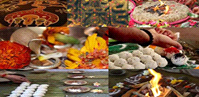
To pay homage to the departed people, Swarg Marg does offerings of fruits, leaves, sweets and milk to lord Shiva with vedic or tantric worship of Shiva and distributes food for the orphans and the beggers at the temples.